I started this grad school program in social entrepreneurship and change because I wasn't simply interested in making money. I wanted to contribute to creating social change - to help empower those who are in a context that has confined their dreams and possibilities.
Last fall, I finally determined that I was interested in the chocolate business and so discovering that the majority of the world's chocolate comes from child slave labor was alarming to me. This problem seems to be coming from Africa - the Ivory Coast. But simply rescuing slaves can't be the only solution to this because there is still an increasing demand for chocolate globally. If the Ivory Coast remains a major producer supplying this demand, then the business of chocolate will always overshadow the ethics.
So I figure that if we can help create new producers of cocoa in other parts of the world, then we can deal with the human rights violations without the business pressures. For example, it's easier to tell chocolate lovers to buy from some where else as opposed to simply telling them not to buy chocolate at all. By shifting the supply, we take business away from the Ivory Coast. Then we can approach them differently. This part of the issue is beyond my own scope though. For me, I want to focus on supporting producers in the Philippines.
They've got their own issues too. With growing demand for quality cocoa, the Philippines has the potential for becoming a major supplier (as they used to be in the 1980's before an insect infestation devastated crops nationwide). The problem is that small holder cacao farmers (essentially family farms) don't have the capacity to produce large quantities of quality cocoa beans. They lack the technology for more efficient farm techniques. They lack the education for effective pest control. They lack the capital to invest in farm inputs. They lack the business knowledge for operating their farm sustainably.
As I came to the Philippines, I learned of great efforts being made by two organizations. The Cocoa Foundation of the Philippines (CocoaPhil) is a local filipino non-profit organization supporting cacao farmers by offering trainings. ACDI/VOCA is a U.S. non-profit organization operating globally that is doing field work in the Philippines. Both organizations work together (and in fact have a contractual relationship for projects and funding). I'm happy to have had the opportunity to work with both organizations during my month-long stay in the Philippines for my grad school internship experience.
Both organizations have developed great connections and relationships with cacao farmers. CocoaPhil seems to operate more in the northern island of Luzon and some in the Visayas region. ACDI/VOCA seems to operate more in the southern island of Mindanao and some in the Visayas region. CocoaPhil does work in Mindanao as well though, particularly in partnership with ACDI/VOCA. The majority of the agriculture in the Philippines comes from Mindanao because the climate is so ideal.
Cacao farmers are engaged through several workshops that help teach effective farm techniques. Through organic farming, they are able to learn how to compost and to manage pests. Farmers have access to demonstration farms in various parts of the country that they can visit to learn techniques. Both CocoaPhil and ACDI/VOCA have field staff that go out to the farmers to build connections. This helps create engagement with the farmers. I didn't necessarily see ways that farmers participated in decision making, however, I did get the impression that the input from the farmers was valued.
I think both CocoaPhil and ACDI/VOCA are effective in engaging with cacao farmers. When I did farm visits in the provinces of Bicol and Quezon (on Luzon) and in the provinces of Davao and Davao del Sur (on Mindanao), I was impressed with the way the field staff was recognizable to farm leaders and also respected by farmers. That was a good indication of the kind of engagement both organizations had with them. CocoaPhil wants to engage with farmers by offering microloans but they need the financial resources to initiate such a program.
Overall, the internship experience helped shape my own social entrepreneurship endeavors. While I'm still working on developing the business side of what I want to do with chocolate (either a product or a location like a cocoa cafe), I do know that I want to provide a direct connection between the producers and the consumers. I want to tell the stories of these farmers who are cultivating the cocoa beans that eventually becomes what the consumers enjoy. I would like to maintain a relationship with CocoaPhil and ACDI/VOCA and help support their mission of supporting, educating, and empowering farmers. I would also like to allocate a portion of profits to continue supporting farm families. I'd like to help provide financial support for school tuition and supplies, medical facilities, literacy classes, and also business training. I'd also like to resource CocoaPhil in implementing a microloan program so that farmers can reinvest in their farms.
Ultimately, this internship experience in the Philippines motivates me to want to continue exploring ways of using cocoa for good.
Showing posts with label cacao. Show all posts
Showing posts with label cacao. Show all posts
Tuesday, February 28, 2012

Wednesday, February 22, 2012
Phase 2: Study of Farmers' Need For Microfinance
Preliminary
Summary Results
Survey Period:
February 15 – 17, 2012
Interviewer: Eric Leocadio
Total
Respondents: 40
Group
A: Gumalang, Baguio, Davao City (18)
Group
B: Subasta, Calinan, Davao City (3)
Group
C: Tawantawan, Baguio, Davao City (5)
Group
D/E: Basiawan, Santa Maria, Davao del Sur
(14)
Gender/Age:
Male:
19 respondents
Female:
21 respondents
Age
Range: 38 – 69 years old
Average
Age: 53 years old
History
of Borrowing: 85% of Respondents (34)
Average
Loan Amount: 13,191.18 P
Loan
Greater Than 10,000P 50% of those with history (17)
Loan
Less Than 10,000P 50% of those with history (17)
Average
Interest Rate: 7%
Used
Loan for Farm: 58.82%
Used
Loan for Personal Needs: 55.88%
Repayment
Rate: 100%
Average
Repayment Length: 7 months
Comfort in
Borrowing or Using Credit:
Comfort
Scale: 0 – 2 (Not at all / Little / Comfortable)
(Measured
average score from respondents)
Borrowing
from Bank: 1.05
Borrowing
from Co-op: 1.65
Borrowing
from Relative: 1.50
Borrowing
from NGO: 1.23
Using
Credit for Inputs: 1.60
Using
Credit for Supplies/Tools: 1.63
Cash
Advance from Trader: 1.20
Aware
of Credit Sources in Area: 72.50%
Willing
to Access Known Sources: 51.72%
Preferred
Reasonable Interest Rate: 5%
(average of responses)
Interested
in Receiving a Microloan
to invest in their farm: 98%
Method of
Handling Money:
Has
Bank Account: 28%
Keeps
Cash Wallet/Purse: 98%
Has
Credit Account: 10%
Risk Assessment:
Lost
Crops Due to Weather or Insects: 30%
(Note:
Only 1 respondent cited weather (flooding) as the reason. All others cited
insect or disease as the reason for the lost crops.)
Farm
impacted by Weather:
Typhoon 0%
Flood 3%
Drought 0%
Other
Weather 0%
Participation in
Cooperatives:
Member
of a co-op 78%
Average
Capital Share 4,097
P (average of co-op members)
Cited
benefits of co-op Patronage,
Dividends
Other
benefits from some co-ops Mortuary Insurance,
marketing, organic
fertilizer, Use
of Post-Harvest Facility
Literacy and Math:
Literacy
Scale: 0
– 2 (Not at all / Little / Very Well)
(Measured
average score from respondents)
Read
Visayan 1.88
Read
Tagalog 1.70
Read
English 1.43
Write
Visayan 1.85
Write
Tagalog 1.70
Write
English 1.28
Basic
Math (Add/Subtract) 1.43
Interested
in Literacy and Math Classes: 98%
Interested
in Business Classes: 95%
Cacao Beans:
Ferment
and Dry at Home 27.50%
Sell
Unfermented Beans 27.50%
Sell
Wet Beans 42.50%
Use
Co-op’s facility 2.50%
Income/Expenses:
Average
hectares: 1.98
Receive
income from coconuts 95%
of respondents
Average
income from coconuts 6,815.22
P/month (average of income receivers)
Receive
income from bananas 60%
of respondents
Average
income from bananas 2,593.42
P/month (average of income receivers)
Receive
income from cacao 93%
of respondents
Average
income from cacao 2,622.54
P/month (average of income receivers)
Receive
income from durian 40%
of respondents
Average
income from durian 2,064.38
P/month (average of income receivers)
Minimal
income from other crops: Mango,
Mangosteen, Lanzones, Corn
Receive
income from livestock 38%
of respondents
Average
income from livestock 1,836.53
P/month (average of income receivers)
Receive
non-farm income 48%
of respondents
Average
non-farm income 2,902.26
P/month (average of income receivers)
Cited
non-farm income sources: SS
Pension, Labor, Store/Shop, Rental Income,
Buy/Sell
cacao beans (wet/dry), service fees,
Honorarium,
Direct selling (avon)
Average
Total Income 13,965.84
P/month
Average
Farm Expenses 3,543.28
P/month
Average
Family/Personal Expenses 5,875.00
P/month
Average
Total Expenses 9,418.28
P/month
Difference
(Income – Expenses) 4,547.56
P
Percent
(Income/Expenses) 148.28%
Respondents
with Positive Net Income: 70% (28)
Respondents
with Deficit: 30% (12)
Respondents
with income more than
double their expenses: 20% (8)
Respondents
with income more than
their expenses but less than double: 50%
(20)
Tuesday, February 21, 2012
Interviewing Farmers and Collecting Data
Last week I flew down to the southern island of Mindanao to Davao City to take part in phase 2 of my global internship experience. I came to work with ACDI/VOCA - an awesome international organization that is helping to improve the economic opportunities for people all around the world. Here in the Philippines, they have been working to support coconut, cacao, and rice farmers through their COCOPAL program. With the support of ACDI/VOCA, i'm here to conduct a small study of cacao farmers in the Davao region to examine the need, usage, and accessibility of micro-finance for small-holder farmers.
Upon my arrival to Davao City, I immediately noticed how clean the streets appeared. I departed from the airport in Manila so I saw the contrast of Manila which had so much litter. It was definitely evident to me that an intentional effort was being made to keep their streets clean. I asked a few residents and I got the impression that the mayor here is pretty strict. Some like her and some don't but nevertheless I think a clean street is good for tourism which benefits their economy. So good for them.

I met with the director of ACDI/VOCA's operations there in the Philippines, along with the staff of about 12 locals. The director is Australian and he's been there for several years now. This part of the internship seemed much more formal as compared to my visit with the CocoaPhil staff. Probably because I had only met with the CocoaPhil staff in person for three hours at their headquarters before going out to visit farms. This time, I would work out of the ACDI/VOCA office. I was given some work space and I interacted with the other staff as needed. This was good because I still had a degree of autonomy. They gave me some direction and they took care of the logistics of me going out to the farmers. But I still got to do the core of the work on my own.
On my first day, I developed my survey tool and methodology. I had to first identify what kind of information I wanted to collect. What would be valuable for me to know? What would be valuable for ACDI/VOCA to know? How would I measure the responses into something quantifiable? With the input of some of the staff, I was able to develop my sets of questions for the farmers, for the bank, for the microfinance NGO, and for the cooperatives.
On my second day, I went to meet with the Mindanao Microfinance Council (MMC). They are a network of microfinance institutions in Mindanao. I thought it was interesting to see how they were encouraging these lending institutions to be socially conscious and to find ways of supporting the farmers. Typically, microfinance is out of reach for many farmers because the interest is so high, the repayment period is too quick, and the collateral is costly. Farmers can lose their farm land, literally. After meeting with the MMC, I met with a representative at one of the major banks called the Development Bank of the Philippines (DBP). Since this was a major institution, I could see that this bank's services would be out of reach for many of the small-holder farmers. Though they want to be accessible, their services are more conducive for farm cooperatives and large farm owners.
The rest of the week was spent traveling to several parts of the Davao region and interviewing the farmers. I had the help of an interpreter who already knew many of the farmers. That made it easier to find farmers who were willing to be interviewed. It was an anonymous interview so I didn't collect names. I just collected demographic information and each person was asked the exact same questions. In total, I was able to interview 40 farmers from four distinct areas of the Davao region.

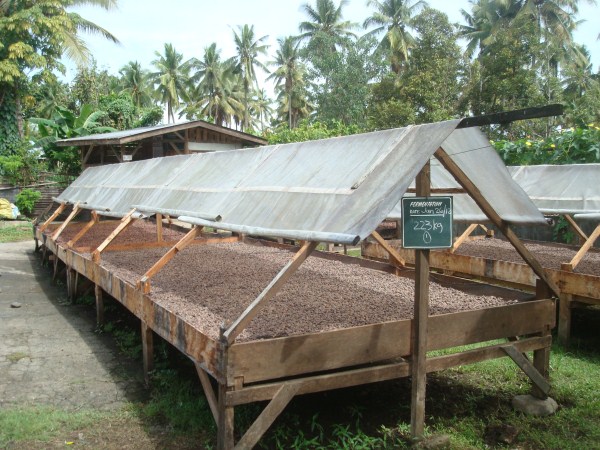
In addition to meeting farmers, I also had the opportunity to visit some post-harvest facilities. I didn't get to see any when I went to Bicol or Quezon provinces because they are at an early stage of cacao farming. It's much more developed in Davao. I also got to meet with and interview representatives from the Bansalan Cooperative Society, a cooperative that serves over 37,000 members. They offer microloans to its members.

After a long week of interviews, my last few days here with ACDI/VOCA is dedicated to compiling the data into a spreadsheet so that I can present some preliminary results to the director. Once I get back to the U.S., I'll write a paper on my study and submit it to both ACDI/VOCA and CocoaPhil. Though not actually part of my class assignment for this internship, I'll be able to use this paper for my final semester's academic portfolio.
Upon my arrival to Davao City, I immediately noticed how clean the streets appeared. I departed from the airport in Manila so I saw the contrast of Manila which had so much litter. It was definitely evident to me that an intentional effort was being made to keep their streets clean. I asked a few residents and I got the impression that the mayor here is pretty strict. Some like her and some don't but nevertheless I think a clean street is good for tourism which benefits their economy. So good for them.

I met with the director of ACDI/VOCA's operations there in the Philippines, along with the staff of about 12 locals. The director is Australian and he's been there for several years now. This part of the internship seemed much more formal as compared to my visit with the CocoaPhil staff. Probably because I had only met with the CocoaPhil staff in person for three hours at their headquarters before going out to visit farms. This time, I would work out of the ACDI/VOCA office. I was given some work space and I interacted with the other staff as needed. This was good because I still had a degree of autonomy. They gave me some direction and they took care of the logistics of me going out to the farmers. But I still got to do the core of the work on my own.
On my first day, I developed my survey tool and methodology. I had to first identify what kind of information I wanted to collect. What would be valuable for me to know? What would be valuable for ACDI/VOCA to know? How would I measure the responses into something quantifiable? With the input of some of the staff, I was able to develop my sets of questions for the farmers, for the bank, for the microfinance NGO, and for the cooperatives.
On my second day, I went to meet with the Mindanao Microfinance Council (MMC). They are a network of microfinance institutions in Mindanao. I thought it was interesting to see how they were encouraging these lending institutions to be socially conscious and to find ways of supporting the farmers. Typically, microfinance is out of reach for many farmers because the interest is so high, the repayment period is too quick, and the collateral is costly. Farmers can lose their farm land, literally. After meeting with the MMC, I met with a representative at one of the major banks called the Development Bank of the Philippines (DBP). Since this was a major institution, I could see that this bank's services would be out of reach for many of the small-holder farmers. Though they want to be accessible, their services are more conducive for farm cooperatives and large farm owners.
The rest of the week was spent traveling to several parts of the Davao region and interviewing the farmers. I had the help of an interpreter who already knew many of the farmers. That made it easier to find farmers who were willing to be interviewed. It was an anonymous interview so I didn't collect names. I just collected demographic information and each person was asked the exact same questions. In total, I was able to interview 40 farmers from four distinct areas of the Davao region.

In addition to meeting farmers, I also had the opportunity to visit some post-harvest facilities. I didn't get to see any when I went to Bicol or Quezon provinces because they are at an early stage of cacao farming. It's much more developed in Davao. I also got to meet with and interview representatives from the Bansalan Cooperative Society, a cooperative that serves over 37,000 members. They offer microloans to its members.
After a long week of interviews, my last few days here with ACDI/VOCA is dedicated to compiling the data into a spreadsheet so that I can present some preliminary results to the director. Once I get back to the U.S., I'll write a paper on my study and submit it to both ACDI/VOCA and CocoaPhil. Though not actually part of my class assignment for this internship, I'll be able to use this paper for my final semester's academic portfolio.
Friday, February 17, 2012
Interviews Completed
This
week, I visited 5 farm cooperatives, interviewed 40 cacao farmers and also
interviewed 1 large 37,000 member cooperative, 1 bank (and snubbed by 2 other
banks), and 1 microfinance non-governmental organization. Whew! We drove all over Davao City and other parts of the region. This was a long but
productive internship week with ACDI/VOCA.
Next week I will start compiling the data.
Next week I will start compiling the data.
Saturday, February 11, 2012
Phase 1: Introduction to Cacao Farming - Part 3
Here are my notes on some of the things I have learned so far about cacao farming and the cocoa industry based on my time with the CocoaPhil team, farmers, and agriculturalists (part 3):
Problem for
Farmers
- Farmers aren’t profitable
enough to sustain themselves
- Farmers don’t have the
money to invest in their own growth
- Current microfinance
institutions require too much collateral or too high interest rates for it
to be a viable option for farmers
- 12% interest rate
- 4% to 5% interest per
month
CocoaPhil Roadmap
- Transparent & Dynamic
Market and Market Information System
- Establish and operate
fermentation and drying centers
- Accreditation, licensing
PH centers
- Means of Markets, price
info dissemination
- Packing houses
- Improved Production
Techniques
- Quality planting
materials
- Farming inputs,
assistance for crop nutrition and protection
- Research /institution to
formulate and continue improving Good Agricultural Practices
- Efficient & Effective
Extension Services
- Enabling farmers on Good
Agricultural Practices
- Business Skills
- Core of capable extension
agents
- Farm-based technology
resource centers
- Enabling Policies and
Regulations
- Loan schemes and credit
windows
- Implementation of
Philippine National Standard (PNS) for cacao
- Program on Research &
Development
- Policies on trading,
exporting, logistics
- Contract Growing Scheme - The
key is massive production of quality planting materials and facilitate
sustainable production
- Seedlings (Plant now, pay
later)
- Other inputs (fertilizer,
IPM materials – paid on deliveries)
- Training and other
extension services
- Post-harvest facilities
and marketing
Developing
Research and Technologies
- solar drying – shortening
the drying time
- better environmental
approaches
- composting
- insect protection
management (no pesticides)
Investing in Small
Farm Holders
- Because of the work that
CocoaPhil has been doing with training small farm holders, they can
properly identify those that are best suited for a microfinance program.
CocoaPhil can leverage the existing relationship and knowledge of small
farm holders so that collateral would not be required for a microloan.
This means that they have a ready-made borrower pool.
- CocoaPhil would start with
$1 million (43 million pesos).
- Microloans would be issued
in the amounts of 100,000 pesos per hectare over 3 years.
- One hectare - $2,500
(100,000 pesos)
- Two hectares - $4,700
(200,000 pesos)
- Three hectares - $7,000
(300,000 pesos)
- Microloans would support
approximately 230 farm families
- One hectare – 80
microloans x 100,000 pesos = 8 million pesos
- Two hectares – 100
microloans x 200,000 pesos = 20 million pesos
- Three hectares – 50
microloans x 300,000 pesos = 15 million pesos
- Farmers will use the
microloan for:
- the purchase of cacao
seedlings – 500 seedlings per hectare
- farm equipment, supplies,
and materials
- family subsidy (farm
worker salary)
- CocoaPhil continues to
offer assistance programs to ensure farmer success
- In 3 years, farmers will reach
the post-harvest stage of the Cocoa Value Chain. They sell their cocoa
beans to CocoaPhil’s post-harvest centers.
- This ensures that the
farmers will be able to sell their beans at a good price and thus be
profitable. Farmers can either sell their beans for the profit so that
they can pay back their microloan or they can give their beans to the
post-harvest center in-kind towards the payback of their microloan. Once
the microloan is paid back, the farmers can continue to harvest and sell
their cocoa beans to the post-harvest centers.
- This ensures the
quality-control. Farmers focus on the agriculture. The post-harvest
center takes care of the quality processing.
- Post-harvest centers
continue the value chain with processing and production. They can now sell
quality cocoa beans to global buyers.
- Profits of post-harvest
centers can be used to further benefit the livelihoods of farm families
and farm workers
- health care centers for
farm families
- day care centers for farm
families
- set up approximately 30
around the country
Financial Impact
- Farmers can sell dry beans
to CocoaPhil for 40-60 pesos per kg
- 50 pesos x 1,500 kg = 75,000
pesos / 42.3 = $1,773.05 per metric ton extra income for farmers
- CocoaPhil can sell to
buyers for 80-120 pesos per kilo
- 100 pesos x 1,500 kg = 150,000
pesos / 42.3 = $3,546.10 per metric
ton
Friday, February 10, 2012
Phase 1: Introduction to Cacao Farming - Part 2
Here are my notes on some of the things I have learned so far about cacao farming and the cocoa industry based on my time with the CocoaPhil team, farmers, and agriculturalists (part 2):
The Cocoa Industry
- Since 2007, global production
of cocoa beans has averaged 3,656,660 metric tons:
- Africa 69.9%
- Asia 16.6%
- Americas 13.5%
- Cacao bean prices by
December 2010 was at $3,470 US per metric ton
- Global cocoa consumption
is about 3.5 million metric tons and has grown 2.5% annually over the past
10 years
- Chocolate product
consumption has been growing at about 3% annually (except in 2009 due to
recession)
- Consumption has been
growing fastest in Brazil
- Per capita consumption of
cocoa is highest in Western Europe and North America where incomes are
higher and is lowest in Latin America and Asia where incomes are lower
- Major manufacturers want
to do more to meet rising demand:
- Kraft Foods in 2009 was
22,000 metric tons; target in 2012 is 50,000 metric tons
- Nestle in 2009 was 4,000
metric tons; target in 2012 is 30,000 metric tons
- Mars in 2009 was 5,000
metric tons; target in 2012 is 100,000 metric tons
- Hersheys in 2009 was
10,000 metric tons; target in 2012 is 855,000 metric tons
- Domestic production in the
Philippines in 2009 was only 6,263 metric tons
- Domestic demand continues
to outpace production
- In Asia, there is
increasing consumption but also a large grinding industry that continues
to expand
- The regional production of
quality fermented beans is only 26% of the 680,000 metric tons of beans
produced annually in the region. As a result, regional processors import
almost 220,000 metric tons of fermented beans from West Africa and South
America.
- Because of higher shipping
costs due to rising fuel prices, the Philippines has an increased competitive
advantage in gaining access to the Asian market compared to West African
and South American
- Race to the Top of the
Global Cocoa Market:
- Indonesia in 2006 was
680,000 metric tons; target in 2020 is 900,000 metric tons
- Papua New Guinea in 2006
was 55,000 metric tons; target in 2020 is 100,000 metric tons
- Philippines in 2006 was
6,000 metric tons; target in 2020 is 100,000 metric tons
- Malaysia in 2006 was
30,000 metric tons; target in 2020 is 50,000 metric tons
- Vietnam in 2006 was 3,000
metric tons; target in 2020 is 30,000 metric tons
Philippines Goal
by 2020
- produce 100,000 metric
tons of cocoa country-wide
- Philippines can intercrop
with 10% of existing coconut areas – that gives approximately 107,874
hectares for planting cacao trees.
- will need to plant 10
million seedlings per year over the next 5 years – 50 million cacao trees
will result in approximately 105,000 metric tons in anticipated cocoa bean
production by 2020
Thursday, February 9, 2012
Phase 1: Introduction to Cacao Farming - Part 1
Here are my notes on some of the things I have learned so far about cacao farming and the cocoa industry based on my time with the CocoaPhil team, farmers, and agriculturalists (part 1):
The Cocoa Value
Chain / The Cocoa Supply Chain
Small Holder Farmer
- Nursery - Seedings
·
Plantation and Maintenance
·
Harvest
·
Post Harvest
o
Fermentation
o
Drying
Trader
Grinder
Industry
- Confectionary Industry
- Food Industry
- Industrial, Artisanal,
Pharma & Tobacco consumers
Retailer
Consumer
Cacao Farming
- Small holder farms are
family operated – 1 to 3 hectares.
- Seedlings require 80-90%
shade. Medium sized trees only require 50% shade.
- Coconut trees provide
permanent shade cover. Banana trees provide temporary shade cover.
- Cacao trees are best
interplanted alongside coconut trees and banana trees.
- Seedlings take 18-24
months to flower. It takes about 6 months for flowers to reach pod
maturity.
- Primary pollinator is the
mitges – little moths.
- Pollination times are 5am
– 7am and 7pm – 8pm.
- Smoking on the farm can
affect the mitges and hinder pollination.
- Pods should be harvested
at 75-80% ripeness. Pods that are too ripe are likely to have beans that
are germinated.
- 18-25 pods = 1 kilogram of
wet beans
- 3 kg of wet beans = 1 kg
of dry beans
- 50 kg needed to ferment
- 1 metric ton = 1,000
kilograms
- 1 cacao tree produces 2 kg
of dry beans per year
- Best soil conditions is
loam soil – porous
- Best temperature is 18
degrees Celsius
- Best pH is 4.5 – 6.5
- 1 hectare = 1,100 cacao trees
open with 3 meters apart (good only if 18 degrees Celsius and no summer –
rainy season year round. otherwise, needs shade cover)
- 1 hectare = 750 cacao
trees interplanted with other crops (coconut & banana)
- 1 hectare of 750 cacao
trees will produce (2 kg/yr) 1,500 kg of dry beans per year
- 1 hectare = 50,000 pesos
in expenses (25,000 pesos for seedlings, 25,000 pesos for labor)
- Labor can include
fertilizing, clearing, holing, staking, weeding, etc.
- CocoaPhil membership is
1,000 pesos per year.
- Farmers also pay land tax
and business license annually.
Wednesday, February 8, 2012
My First Farm Visits
I spent the last several days in the province of Bicol and
also the province of Quezon. I stayed in a cheap hotel in Naga City across the
street from a mall. CocoaPhil arranged for me to connect with one of their
technical advisors. She served as my escort, translator, and teacher.

Our first stop was to go to Naga City’s Department of
Agriculture in City Hall. There I got to meet the Rural Based Coordinator and
also the Agricultural Engineer. After spending the day with them visiting farms
and learning about the city’s efforts, I learned that Naga City is doing a
pretty good job at balancing urban growth and agricultural support. The city
has a motto for being all “S.M.I.L.E.S.” which stands for
See-Meet-Invest-Live-Enjoy-Study. They
presented their city as an innovative and wholistic place.

My first farm visit was to a fairly large one owned by a
farmer who was also the president of the Naga City Cacao Planters Organization.
His goal is for the organization to evolve into a cooperative. Since he is also
an engineer, I was impressed with the way he designed his irrigation water
ways. After taking a walking tour through his newly planted cacao trees, he had
a meal prepared for us.
More Filipino hospitality!

In addition to seeing a farm in Naga City, we also visited
several farms in the city of Lupi. Lupi was about an hour away from Naga City
so it was more rural. I got to meet about a dozen farmers who had already
gathered to meet me. Together, our group took walking tours through three cacao
farms. I also got to see much of their barangay called Bulawan Junior. A
barangay is kind of like a subsection of a city district, like a rural area
with several neighborhoods. After the tour, of course they prepared a meal for
everyone to eat.

On another day, we drove even further to the neighboring
province of Quezon. A province is kind of like a county. We visited the town of
Tagkawayan. I got to meet the Municipal Agriculturalist (the department head)
and some of their staff. Then a pair of agricultural aides took us out to visit
a few more farms.


In total, I was able to visit 10 farms and meet about 25
farmers. I was not expecting to see such diversity in cacao farming. It was interesting to see that all 10 farms had very different
landscapes. Some farmers planted their cacao trees on very hilly terrain. Some
planted on very flat land. Some had plenty of shade and others inappropriately
had too much sun. Intercropping means that they plant two or three different
kinds of trees next to each other. It’s common to intercrop coconut trees,
banana trees, and cacao trees. Cacao trees require 80-90% shade while they are
seedlings and about 50% shade while they are medium sized. So the coconut trees
provide the permanent shade cover higher up and the banana trees provide the
immediate shade cover closer to the ground. It was interesting to see the
various designs that the farmers used to plant their trees. Some used a
triangle design. Others planted the different trees in rows. Others seemed to
have a more random design. I got to see very good designs that resulted in
healthy trees. I also got to see poor designs that resulted in unproductive or
slow-producing trees.

I learned that agriculture is an art – both in growing and
in design. The farmer can be as creative as he or she likes in the landscape of
their crops. I loved that I could see the personality of the farmer through the
way he or she artistically (or not artistically) placed the trees, built
irrigation systems, and the maintenance of weeds.
Friday, December 30, 2011
Davao Could Be A Key Global Supplier of Cocoa
The Philpress News & Features reported earlier this year that global cocoa buyers have high hopes for the Davao area's cacao producing potential. According to the article:
Japan, China, Malaysia, and Indonesia all have large cocoa processing centers importing 220,000 metric tons of raw cacao fermented beans last year from the Ivory Coast in West Africa.
Meeting the Philippine goal of producing 100,000 tons of cacao by 2020 will elevate the country, especially its high cacao-producing port city of Davao, to becoming a key global supplier.
Asia has a large cocoa processing industry but hardly enough fermented cacao beans to process. Indonesia has the biggest cocoa production at 600,000 tons last year. Papua New Guinea had 50,000 tons and Malaysia had 17,000 tons. India produced 7,000 tons last year and the Philippines produced only 5,000 tons. Vietnam only produced 1,000 tons last year."Among Asian countries, the Philippines has the smallest production of cacao beans at around 5,000 metric tons of cacao beans last year. Its highest production was in 1980 with 20,000 tons and 1990 with 35,000 tons, declining over the years as farmers abandoned cacao farming for other more profitable crops. "
Japan, China, Malaysia, and Indonesia all have large cocoa processing centers importing 220,000 metric tons of raw cacao fermented beans last year from the Ivory Coast in West Africa.
Meeting the Philippine goal of producing 100,000 tons of cacao by 2020 will elevate the country, especially its high cacao-producing port city of Davao, to becoming a key global supplier.
Wednesday, December 28, 2011
High Hopes from Malaysian Trader
The Philpress News & Features earlier this year reported about a Malaysian trader who said that his company is poised to buy all of the cacao produced from the Philippine region over the next 10 years. He says that Davao is a perfect location for producing cocoa because of the great soil, the good rain fall, and the area is not often hit by extreme weather.
Quite simply, the demand for cacao is greater than supply sources. Even with the Philippines meeting its goal for producing 100,000 metric tons by 2020, there would still be larger demand both locally and internationally for cocoa.
Quite simply, the demand for cacao is greater than supply sources. Even with the Philippines meeting its goal for producing 100,000 metric tons by 2020, there would still be larger demand both locally and internationally for cocoa.
Tuesday, December 27, 2011
The 2020 Challenge
Earlier this year, the Philpress News & Features announced a goal for the Philippines to plant 58 million cacao trees by the year 2020. It will require 130,000 filipino farmers planting 7 million cacao trees every year. This will produce 100,000 metric tons of cocoa by 2020.
This was a challenge set by ACDI/VOCA who has been actively assisting the filipino cacao farming industry.
With a modest price of $2500 per metric ton, this is a potential of $250 million in export earnings for the Philippines cocoa industry. The global market price is about $3400 per metric ton.
Since cacao is a great crop that can be planted along side existing ones, farmers who already planting coconut, banana, and mango trees can easily plant cacao and be part of the growing opportunity.
This was a challenge set by ACDI/VOCA who has been actively assisting the filipino cacao farming industry.
With a modest price of $2500 per metric ton, this is a potential of $250 million in export earnings for the Philippines cocoa industry. The global market price is about $3400 per metric ton.
Since cacao is a great crop that can be planted along side existing ones, farmers who already planting coconut, banana, and mango trees can easily plant cacao and be part of the growing opportunity.
Friday, December 16, 2011
The Work of CRS in the Philippines
I found this video today that talks about some of the work that Catholic Relief Services is doing to support cacao farming in the Philippines.
According to their web site, in an article entitled "Making the World Safe for Chocolate" by Laura Sheahen, the pod borer insect is a menace to cacao farming. It worms its way into young cacao pods and destroys the beans. They appeared in the 1980's and severely impacted the Filipino cacao market. Prior to this, several decades before, it was a successful crop. At one time, the Philippines produced about 20% of the world's cocoa.
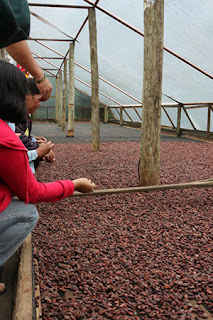
As an effort to revive this crop, Catholic Relief Services (CRS) has a program funded by the U.S. Department of Agriculture aimed at supporting Filipino farmers, providing free seedlings, and paying for areas to be paved so that farmers have a clean place to dry their seeds properly.
It's interesting to see how CRS is helping the cacao farm industry while combating poverty.
According to their web site, in an article entitled "Making the World Safe for Chocolate" by Laura Sheahen, the pod borer insect is a menace to cacao farming. It worms its way into young cacao pods and destroys the beans. They appeared in the 1980's and severely impacted the Filipino cacao market. Prior to this, several decades before, it was a successful crop. At one time, the Philippines produced about 20% of the world's cocoa.
As an effort to revive this crop, Catholic Relief Services (CRS) has a program funded by the U.S. Department of Agriculture aimed at supporting Filipino farmers, providing free seedlings, and paying for areas to be paved so that farmers have a clean place to dry their seeds properly.
It's interesting to see how CRS is helping the cacao farm industry while combating poverty.
Sunday, December 4, 2011
ACDI/VOCA's SUCCESS Alliance Program
I have started researching cacao farming and I came across this article online from Agriculture Business Week posted October 18, 2008 called "Cacao: The Resurrection Crop for Farmers in the Philippines."
 From this article, I learned that cacao has been cultivated in the Philippines since the 17th century and that there has been a major decline in cocoa production there since 1988. It would appear that by 2006, cacao was planted on less than 10,000 hectares across the country with the majority of it coming from the Davao region.
According to the article, the estimated volume of cocoa production in 2008 was only 6,000 to 7,000 tons with more than 95% of it used locally.
But it seems there is growing local interest in cacao farming credited mostly to the SUCCESS Alliance Philippines Phase II program funded by the U.S. Department of Agriculture and implemented by U.S. non-profit ACDI/VOCA (Agricultural Cooperative Development International and Volunteers in Overseas Cooperative Assistance) and its local partner The Cocoa Foundation of the Philippines (also called CocoaPhil). According to the project profile page on the ACDI/VOCA's web site, "SUCCESS" stands for Sustainable Cocoa Enterprise Solutions for Smallholders. Starting in 2006, it was a $2.6 million program over 3 years to help improve cocoa production and marketing linkages.
 The demand is there. Locally, the Philippines needs about 32,000 tons of cocoa production to meet local demand which means the majority is imported from elsewhere. There is also a shortage of high-quality cocoa.
There is currently more than 2,000,000 hectares of coconut lands where cacao can be inter-planted. The coconut trees provide the necessary shade coverage for ideal cacao planting conditions. The profit potential is huge. More than $1,500 per hectare of net income can be generated from 500 mature trees each year. The international demand for cocoa beans is growing at about 90,000 tons annually. Regional demand from Southeast Asian grinders is at 220,000 tons that is imported from Africa and other distance countries. According to their web site,
 They have trained more than 150,000 local farmers. They have helped approximately 800 farmers improve productivity and quality of 400,000 cacao trees. They have distributed over 1.12 million plants to farmers.
It's clear that ACDI/VOCA has made tremendous strides towards improving cocoa production. I'll reach out to them to explore the possibility of doing my global internship with them. It would be really interesting to see how they would measure their own success now that the program has concluded in 2009.
Note: Photos here taken from ACDI/VOCA's Facebook page.

According to the article, the estimated volume of cocoa production in 2008 was only 6,000 to 7,000 tons with more than 95% of it used locally.
But it seems there is growing local interest in cacao farming credited mostly to the SUCCESS Alliance Philippines Phase II program funded by the U.S. Department of Agriculture and implemented by U.S. non-profit ACDI/VOCA (Agricultural Cooperative Development International and Volunteers in Overseas Cooperative Assistance) and its local partner The Cocoa Foundation of the Philippines (also called CocoaPhil). According to the project profile page on the ACDI/VOCA's web site, "SUCCESS" stands for Sustainable Cocoa Enterprise Solutions for Smallholders. Starting in 2006, it was a $2.6 million program over 3 years to help improve cocoa production and marketing linkages.

There is currently more than 2,000,000 hectares of coconut lands where cacao can be inter-planted. The coconut trees provide the necessary shade coverage for ideal cacao planting conditions. The profit potential is huge. More than $1,500 per hectare of net income can be generated from 500 mature trees each year. The international demand for cocoa beans is growing at about 90,000 tons annually. Regional demand from Southeast Asian grinders is at 220,000 tons that is imported from Africa and other distance countries. According to their web site,
"ACDI/VOCA achieves this through activities that deliver farmer training and extension, establish post-harvest processing sites, build capacity in nursery plant production, rehabilitate old cocoa trees and establish internationally acceptable cocoa bean quality standards. A major focus is promoting the opportunities and participation of smallholder farmers in the cocoa value chain as a means of poverty reduction and economic growth."
It's clear that ACDI/VOCA has made tremendous strides towards improving cocoa production. I'll reach out to them to explore the possibility of doing my global internship with them. It would be really interesting to see how they would measure their own success now that the program has concluded in 2009.
Note: Photos here taken from ACDI/VOCA's Facebook page.
Friday, December 2, 2011
Growing Interest in Filipino Cacao Farming

In preparation for my future business, I know that I will need to learn the intricacies of cultivating cacao and educate myself about the relevant issues to cacao farming. Either way, I would like to source my cocoa from the Philippines so that it can benefit Filipino farmers. As a Filipino-American, I am particularly interested in learning more about my heritage and this will be a great way to do this. I still have family living in the Philippines. Depending on conditions, I would even consider investing in cacao farming, purchasing land, and hiring local farm workers. Perhaps I can help contribute to the cocoa production output from the Philippines.
It'll be interesting to start learning more about Filipino cacao farming and the related issues associated with it.
Monday, November 28, 2011
The New Field of Cacao Farming

It's all about operating for more than one's own personal economic benefit. Rather than the traditional bottom line of "profit," it's about the triple bottom line of people, planet, and profit. The sustainable benefit of all these three are the goal.
Some of the hallmarks of social entrepreneurship is sustainability, systemic thinking, and innovation. We're finding creative ways to solve the world's most pressing problems by developing systemic solutions that have a cascading impact on interconnected communities, industries, and eco-systems.
For me personally, I wanted to help find broader, innovative, systemic solutions to social and environmental challenges. For the past five and a half years, I've founded and operated a non-profit organization called the Catalyst Network of Communities that creates spaces for individuals and organizations to connect, to collaborate and to share resources as an effort to combat the fragmented, competitive, and redundant atmosphere among community organizations. We are a network of over 90 community organizations and businesses but we measure our impact by the number of participating partners.
As I help Catalyst establish a solid foundation for its mission, I've been wanting to embark on new ventures. I wanted to create a social enterprise with a for-profit model that helped people. So I'm exploring the new field of cacao farming. Cocoa! Chocolate! But how can I create a cocoa business that helps people?
That is what I'm about to figure out. This blog will help me chronicle my journey, process my thoughts, and share my research.
I am currently a graduate student at Pepperdine University's Graduate School of Education and Psychology working towards a Master of Arts in Social Entrepreneurship and Change. As part of the program, I am doing research and will participate in a global internship experience. I get to choose the country, the social issue, and the organization to work with.
My choice of study and exploration will be Cacao Farming and Cocoa Production in the Philippines. I'm still searching for (securing) a host organization.
This will be fun!
Subscribe to:
Posts (Atom)